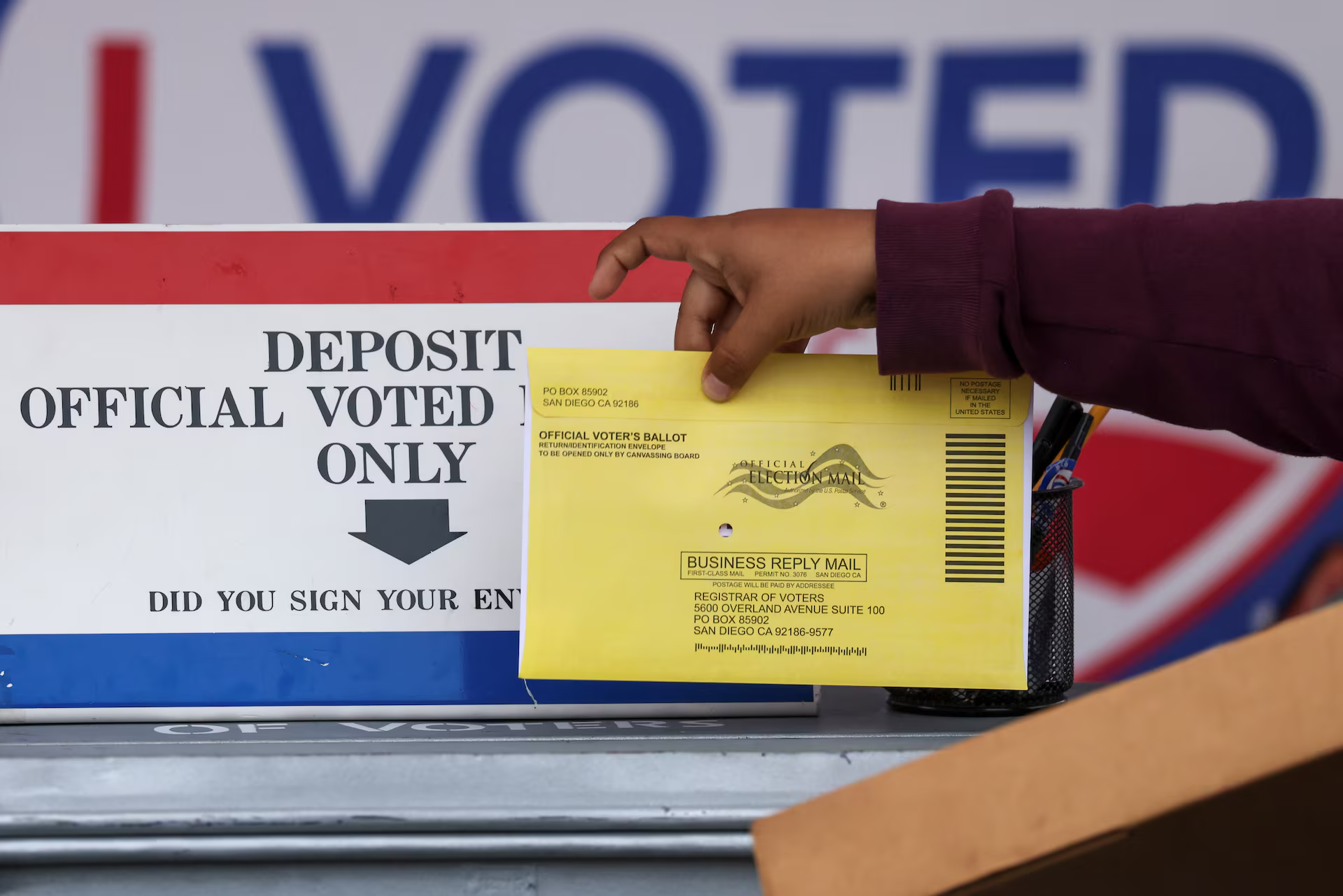
On the eve of the midterms, the U.S. Supreme Court denied without noted dissent a Justice Department request to force California to set aside about 20,000 mail ballots from people flagged as likely noncitizens.
By Hisarak News Desk
Late Monday, hours before Election Day, the Supreme Court turned down an emergency appeal from the Trump administration over California mail ballots, according to CBS News, SCOTUSblog, and NPR.
What the Court Did
In a one-line, unsigned order released shortly before 6 p.m. Eastern time, the justices denied the injunction request. There were no noted dissents. Justice Elena Kagan referred the filing to the full Court. California was not asked to respond first, CBS News and NBC News reported.
Solicitor General D. John Sauer had asked that California keep the ballots separate until citizenship could be checked. “Once California commingles the challenged ballots with lawful ones,” Sauer wrote, “there is no way to get the challenged ballots back,” according to SCOTUSblog. He argued federal law bars noncitizen voting and that “any ballot cast by an alien is unlawful.”
The Administration’s Case
The Justice Department says it identified roughly 20,000 “likely” noncitizens on California’s rolls and that counting their ballots would dilute lawful votes. Noncitizens are barred by federal law from voting in U.S. elections. Confirmed cases remain rare, though CBS News notes the department has charged more than 200 people for alleged illegal voting in past elections.
Acting Deputy Attorney General Trent McCotter said on X Monday that California “has refused to work with the Federal Government to protect against noncitizen voting, which dilutes lawful votes.” The White House and Justice Department did not immediately comment after the denial, Axios and NBC News reported.
California’s Response and Lower Courts
State officials disputed the list’s accuracy and warned late segregation could block eligible citizens. Voting has been underway since early October. More than 6 million mail ballots have been returned, and California has more than 23 million registered voters, CBS News reported.
- U.S. District Judge David Carter last week denied a temporary order and called the identification process “rife with uncertainty and errors.”
- On Friday, Ninth Circuit Judges Mark Bennett and Gabriel Sanchez refused emergency relief, citing the Purcell principle—courts generally avoid changing election rules close to Election Day—and states’ role in running elections, NPR reported. Judge Patrick Bumatay dissented.
- In a related case, a UCLA Voting Rights Project review found 42% of names on the DOJ list were not on California’s current rolls, with some naturalized citizens included, NPR reported.
Official Reactions
Gov. Gavin Newsom said the highest court “firmly slapped down the Trump DOJ’s baseless attack on California’s electoral process — not even entertaining it,” per a state press release. Attorney General Rob Bonta said courts had rejected the administration’s emergency efforts four times. Secretary of State Shirley N. Weber said Californians could “focus on the most important task at hand — casting their ballot.” On X, Newsom called the ruling a “HISTORIC Supreme Court defeat” and urged people to vote.
Sources: CBS News; SCOTUSblog; NPR; NBC News; Axios; California Governor’s Office; California AG Rob Bonta; Trent McCotter on X (Nov. 2, 2026); Gavin Newsom on X (Nov. 2, 2026); AP News.